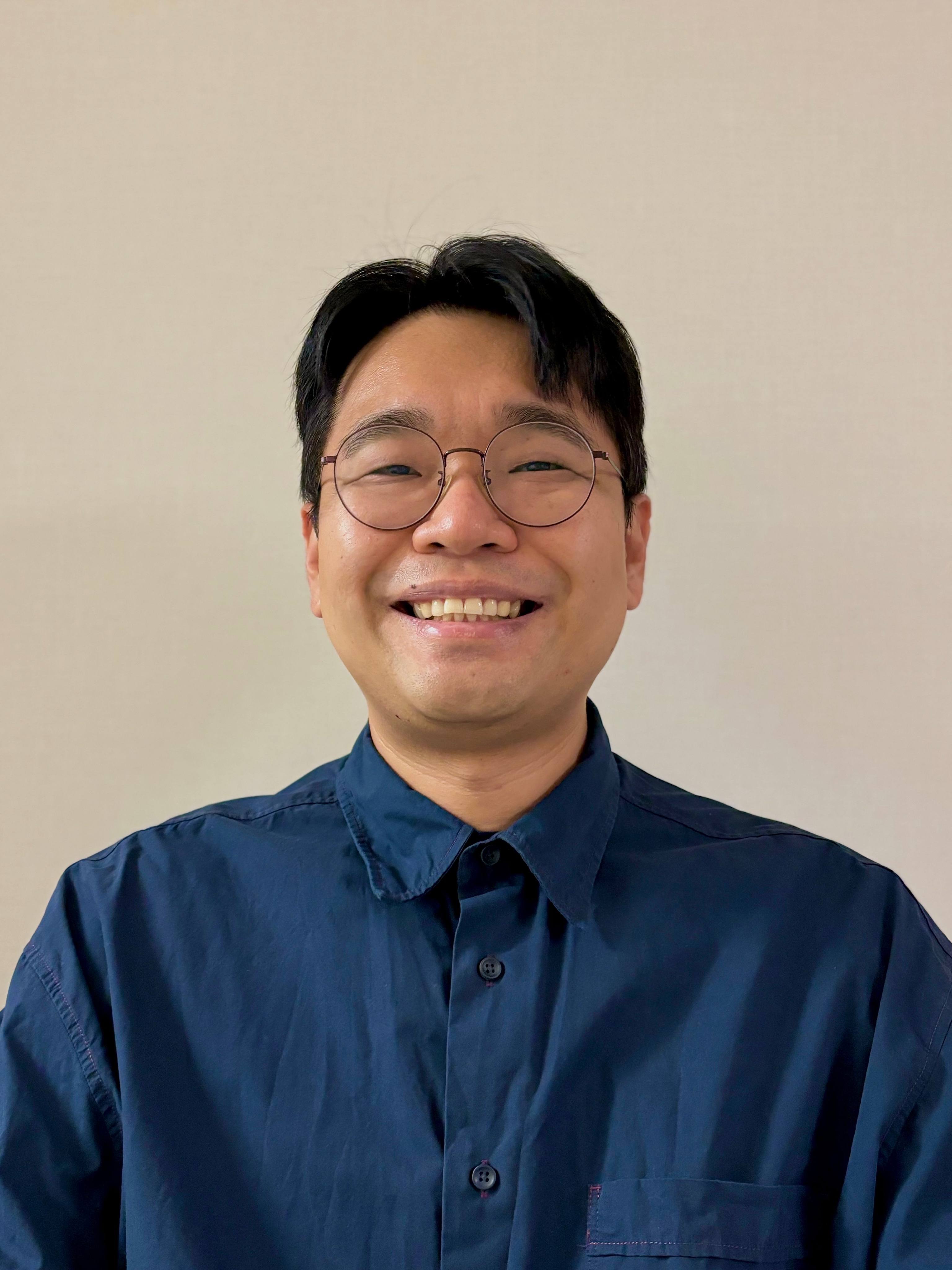
Byungjun Kim (김병준)
Assistant Professor, Cultural Informatics
The Graduate School of Korean Studies, The Academy of Korean Studies
Co-Director, Center for Digital Humanities @ AKS
bjkim@aks.ac.kr · bjkim@byungjunkim.com · +82-31-730-8161
323 Haogae-ro, Bundang-gu, Seongnam-si, Gyeonggi-do, Republic of Korea
RESEARCH PROFILE
My research lies in digital humanities and computational social science: I analyze large-scale bibliographic and textual data to study how scholarly and cultural knowledge is produced and communicated. (디지털인문학과 전산사회과학을 중심으로, 대규모 서지·텍스트 데이터를 분석해 학술 지식과 문화 지식이 생산되고 소통되는 방식을 연구합니다.)
Keywords: digital humanities · computational social science · cultural analytics · bibliometrics and science of science · natural language processing and text mining · scholarly communication and open access · Korean datasets and language models
EDUCATION
Ph.D. in Data Science
- Sungkyunkwan University, Seoul, Korea (Mar. 2018 – Aug. 2022)
- Department: Interaction Science
- Thesis: Mapping the Knowledge Structure of Korean Humanities-Bibliographic data analysis of humanities journal articles in the Korea citation index, 2004~2019 (한국 인문학의 지식구조 파악 : KCI 인문학 논문의 서지 데이터 분석, 2004~2019)
- Advisor: Jang Hyun Kim
M.S. in Culture Technology
- Korea Advanced Institute of Science and Technology (KAIST), Daejeon, Korea (Mar. 2015 – Feb. 2017)
- Department: Graduate School of Culture Technology
- Thesis: The shift of critical language : the shifting aspects of concept words shown criticism in literature magazines, 1995~2015 (비평 언어의 변동 : 문예지 비평 텍스트에 나타난 개념단어의 변동 양상, 1995~2015)
- Advisor: Wonjae Lee & Bong Gwan Jun
B.S. in Korean Language and Literature
- Sungkyunkwan University, Seoul, Korea (Mar. 2008 – Feb. 2015)
- Department: Department of Korean Language and Literature & Department of Film, Television and Multimedia (Dual Major)
RESEARCH INTERESTS
- Digital humanities
- Computational social science
- Cultural analytics
- Bibliometrics and science of science
- Natural language processing and text mining
- Scholarly communication and open access
- Korean studies, Korean datasets and language models
RESEARCH EXPERIENCES
-
Assistant Professor
- Cultural Informatics, The Graduate School of Korean Studies, The Academy of Korean Studies, Korea (Sep. 2024 ~ Present)
- Research in digital humanities and computational social science
-
Co-Director
- Center for Digital Humanities, The Academy of Korean Studies, Korea (Sep. 2024 ~ Present)
- https://digitalhumanities.kr
-
Research Assistant Professor
- Center for Digital Humanities & Computational Social Sciences, KAIST, Korea (Jan. 2023 ~ Aug. 2024)
- Research in digital humanities and computational social science
-
Research Fellow
- Trier Center for Digital Humanities, Universität Trier, Germany (Mar. 2024 ~ May. 2024)
- CLS INFRA Fellowship, research in computational literary studies
-
Research Associate
- Center for Digital Humanities & Computational Social Sciences, KAIST, Korea (Nov. 2021 ~ Dec. 2022)
- Research in computational social sciences and digital humanities
-
Graduate Research Assistant
- DSSAL (Data Science and Social Analytics Lab), Sungkyunkwan University, Korea (Jan. 2018 ~ Nov. 2021)
-
Manager
- Data Research Team, Bigvalue, Korea (Jun. 2017 ~ Dec. 2018)
- Real estate data analysis and price prediction artificial intelligence algorithm development
-
Associate
- KB INSURANCE CO., LTD., Korea (Jan. 2017 ~ Jun. 2017)
- Data Analysis
-
Exchange Student
- Media and Arts, Tampere University of Applied Sciences (TAMK), Finland (Aug. 2013 ~ Dec. 2013)
PUBLICATIONS
Bold indicates the author’s own name. Full corresponding-authorship information is available in the CV.
SSCI / A&HCI / SCIE / SCOPUS
- Gayeon Kim, Sunyoung Park, Hyein Ji, Haram Lee, Bogyeom Lee, Chanhee Jeong, and Byungjun Kim, “KNoTE: A TEI Encoded XML Dataset of Modern Korean Novels”, JOURNAL OF OPEN HUMANITIES DATA, 12, 102, (2026), https://doi.org/10.5334/johd.590
- Iro Lim, Hyein Ji, and Byungjun Kim, “KPoEM: A Human-Annotated Dataset for Emotion Classification and RAG-Based Poetry Generation in Korean Modern Poetry”, THE REVIEW OF KOREAN STUDIES, 29(1), 161-206, (2026), https://doi.org/10.25024/review.2026.29.1.006
- Byungjun Kim, Jonghyun Jee, and Donghyun Woo, “Mapping the Semantic Transformations of Major Powers in Cold War East Asia: A Word Embedding Approach Using Chinese and Korean Newspapers (1946-95)”, DIGITAL SCHOLARSHIP IN THE HUMANITIES, 41(2), 778-793, (2026), https://doi.org/10.1093/llc/fqag003
- Youjin Hong, Byungjun Kim, June Jeon, and Lanu Kim, “Has Higher Education Become More Interdisciplinary? A Longitudinal Analysis of Syllabi Using Natural Language Processing”, HUMANITIES AND SOCIAL SCIENCES COMMUNICATIONS, 12(1), 1841, (2025), https://doi.org/10.1057/s41599-025-06126-7
- Seojoon Lee, Byungjun Kim, and Bong Gwan Jun, “Automatic Detection of Four-Panel Cartoon in Large-Scale Korean Digitized Newspapers using Deep Learning”, JOURNAL OF OPEN HUMANITIES DATA, 10, 36, (2024), https://doi.org/10.5334/johd.205
- Jonghyun Jee, Byungjun Kim, and Bong Gwan Jun, “The Role of English Wikipedia in Mediating East Asian Historical Disputes: The Case of Balhae”, ASIAN JOURNAL OF COMMUNICATION, 34(4), 399-418, (2024), https://doi.org/10.1080/01292986.2024.2342822
- Byungjun Kim, Soeun Yang, and Hana Kim, “Voices of Transitions: Korea’s Online News Media and User Comments on the Energy Transition”, ENERGY POLICY, 187, 114020, (2024), https://doi.org/10.1016/j.enpol.2024.114020
- Jieun Song, Byungjun Kim, Minjeong Kim, and Paul Iverson, “The Korean Speech Recognition Sentences: A Large Corpus for Evaluating Semantic Context and Language Experience in Speech Perception”, JOURNAL OF SPEECH, LANGUAGE, AND HEARING RESEARCH, 66(9), 3399-3412, (2023), https://doi.org/10.1044/2023_JSLHR-23-00137
- Yerin Kim, Byungjun Kim, Minhyung Park, Woomin Nam, and Jang Hyun Kim, “A Soft Power Challenge, or an Opportunity? A Big Data analysis on Chinese Soft Power During COVID-19 Pandemic”, FOREIGN POLICY ANALYSIS, 19(3), orad011, (2023), https://doi.org/10.1093/fpa/orad011
- Kyeo Re Lee, Jang Hyun Kim, Jayeon Jang, Jeewoo Yoon, Dongyan Nan, Yonghwan Kim, and Byungjun Kim, “News big data analysis of international start-up innovation discourses through topic modelling and network analysis: comparing East Asia and North America”, ASIAN JOURNAL OF TECHNOLOGY INNOVATION, 31(3), 581-603, (2023), https://doi.org/10.1080/19761597.2022.2134154
- Kyeo Re Lee, Byungjun Kim, Dongyan Nan, and Jang Hyun Kim, “Structural Topic Model Analysis of Mask-Wearing Issue Using International News Big Data”, INTERNATIONAL JOURNAL OF ENVIRONMENTAL RESEARCH AND PUBLIC HEALTH, 18(12), 6432, (2021), https://doi.org/10.3390/ijerph18126432
- Byungjun Kim, Minjoo Yoo, Keon Chul Park, Kyeo Re Lee, and Jang Hyun Kim, “A value of civic voices for smart city: A big data analysis of civic queries posed by Seoul citizens”, CITIES, 108, 102941, (2021), https://doi.org/10.1016/j.cities.2020.102941
Refereed International Conference Proceedings (AI/NLP)
- Andreas van Cranenburgh, Xiaoyan Yang, Alvanita, Chiara N. Di Domenico, Maria Ferragud, Arcangelo Graciotti, Andrei G. Ion, Byungjun Kim, Sunyoung Park, Nadia Visser Solissa, Xuemei Zhou, and Federico Pianzola, “GOLEMcoref: A Multilingual Coreference Dataset of Fiction”, Proceedings of the 64th Annual Meeting of the Association for Computational Linguistics (ACL 2026), Volume 2: Short Papers, 472-480, (2026), https://aclanthology.org/2026.acl-short.39/
Korea Citation Index (KCI)
- Seul Koo, Gayeon Kim, and Byungjun Kim, “Lexical Change in Korean Humanities and Social Sciences Abstracts after the Commercialization of LLMs: An Analysis Based on KCI Abstract Data, 2004-2024 (LLM 상용화 이후 한국 인문사회과학 학술 초록의 어휘 변화: 2004~2024년 KCI 초록 데이터 기반 분석)”, Language and Information, 30(1), 1-24, (2026), https://doi.org/10.29403/LI.30.1.1
- Joo Chan Choi, Byungjun Kim, Kyungmin Kim, and Yeseul Huh, “Thirty-One Years of the Age of the Novel, Its Hundredth Question — Reading The Journal of Korean Fiction Research, Issues 1-99, through Data (소설의 시대 31년, 그 백 번째 물음 - 데이터로 읽는 『현대소설연구』 1~99호)”, The Journal of Korean Fiction Research, 100, (2025), https://doi.org/10.20483/JKFR.2025.12.100.9
- Byungjun Kim, and Dae-won Noh, “How Will Generative AI Change Humanities Research? (생성형 AI는 인문학 연구를 어떻게 바꿀까?)”, The Journal of Yeongju Language & Literature, 59, (2025), https://doi.org/10.30774/yjll.2025.2.59.203
- Jinseok Choi, Saeheen Choi, Byungjun Kim, Yesel Huh, Joochan Choi, and Hoduk Hwang, “Dual Perspectives on Park Wan-suh - A Digital Analysis Explores Institutional and Gender Studies (두 박완서, 제도와 젠더 혹은 디지털 작가 연구의 시좌 - 2010년대의 『여성문학연구』를 중심으로 -)”, CONCEPT AND COMMUNICATION, 34, (2024), https://doi.org/10.15797/concom.2024..34.004
- Jaehyun Seo, Na Ha, Minwoo Kim, Jimin Han, Byungjun Kim, and Sojeong Park, “Distant Reading on “Jeohui” - A Study on the Diachronic Changes of Two Types of ‘Jeohui’ Applying an ELECTRA-Based Semantic Classification Model and N-gram Analysis (멀리서 읽는 “저희”— ELECTRA 기반 의미 분류 모델과 N-gram을 활용한 두 가지 ‘저희’의 통시적 변화 양상 연구)”, DAEDONG MUNHWA YEON’GU, 128, (2024), https://doi.org/10.18219/ddmh..128.202412.513
- (KCI 미등재) Byungjun Kim, “Design and Implementation of a Subword-based Morphological Analyzer for Modern Sino-Korean Mixed Texts (근대 국한문혼용체 자료 서브워드 기반 형태소 분석기의 설계와 적용)”, Korean Journal of Digital Humanities, 1(2), (2024), https://doi.org/10.23287/KJDH.2024.1.2.5
- (우수등재) Woori Jang, Byungjun Kim, and Bong Gwan Jun, “Narrative Structure and Cultural-Historical Significance of “Meongteongguri”, Korea’s First Serialized Newspaper Comic (한국 최초 신문연재만화 「멍텅구리」의 서사 구조와 문화사적 의미 연구)”, Humanities Contents, 74, (2024), https://doi.org/10.18658/humancon.2024.09.231
- Yunho Lee, and Byungjun Kim, “The Expansion and Diversification of Webtoon-Related Research in the Korean Academic Field: A Structural Topic Modeling Based on KCI Paper Bibliographic Data from 2003 to 2023 (한국 학술장 내 웹툰 관련 연구의 확장과 분화: KCI 논문 서지 데이터 기반 구조적 토픽 모델링 분석, 2003~2023)”, The Korean Journal of Animation, 20(3), (2024), https://doi.org/10.51467/ASKO.2024.09.20.3.80
- (KCI 미등재) Byungjun Kim, “The Future of Digital Humanities, Smart Big Data: A Postscript from a Research Fellowship at Trier Center for Digital Humanities in Germany (디지털인문학의 미래, 스마트 빅데이터: 독일 트리어 디지털인문학 센터 CLS 연구 펠로우 후기)”, Digital+Humanities, (2024), https://doi.org/10.5281/zenodo.13293696
- Byungjun Kim, Yeseul Huh, Joo Chan Choi, and Jinseok Choi, “Portraits of Foucault in the Realm of Korean Modern Literature: Tracing Changes in Foucault Citations through Bibliographic Data from KCI-Indexed Journals, 2008-2021 (푸코의 초상 - 한국 현대문학 학술장의 푸코 인용 양상 변화, 2008~2021)”, Society and Theory, 46, (2023), https://doi.org/10.17209/st.2023.11.46.305
- Byungjun Kim, and Bong Gwan Jun, “Minjok, Gungmin, Gukga - Tracking Changes in the Meaning of National Discourse in Chosun Ilbo Articles Using Dynamic Word Embedding (1920-40) (민족, 국민, 국가-시계열 워드 임베딩을 활용한 조선일보 기사의 민족 담론 의미 변동 추적(1920~40) -)”, The Journal of Korean Fiction Research, 90, (2023), https://doi.org/10.20483/JKFR.2023.06.90.5
- (우수등재) June Jeon, Byungjun Kim, Jaehong Kim, and Lanu Kim, “Opening the Blackbox of Computational Social Science Research Process: A Case of Comparative Study of Social Science Academia (전산사회과학 연구과정의 블랙박스 열기: 아카데믹 데이터베이스를 활용한 비교사회학 연구를 중심으로)”, Korean Journal of Sociology, 57(2), 131-157, (2023), https://doi.org/10.21562/kjs.2023.05.57.2.131
- Jinseok Choi, Byungjun Kim, Yeseul Huh, Joo Chan Choi, and Hoduk Hwang, “Kim Yunsik and Our Epoch, A Demographic Viewpoint of Citation - Korean Modern Literature Researchers’ Citation Patterns of Kim Yunsik’s Writings by Gender and Generation, 2004-2019 (김윤식과 우리 시대, 인용의 인구사회학적 시좌 : 현대문학연구자의 성별 및 세대 별 김윤식 저술 인용 양상 연구(2004-2019))”, Korean Language and Literature in International Context, 96, (2023), https://doi.org/10.31147/IALL.96.12
- Jiseong Yang, Byungjun Kim, and Wonjae Lee, “Media coverage of the conflicts over the 4th Industrial Revolution in the Republic of Korea from 2016 to 2020: a text-mining approach”, Asian Journal of Innovation and Policy, 11(2), 202-226, (2022), https://doi.org/10.7545/ajip.2022.11.2.202
- Jaehyun Seo, Byungjun Kim, Minwoo Kim, and Sojeong Park, “Distant Reading on “Uri” — Word2Vec and N-gram Analysis on Modern Korean Novels (멀리서 읽는 “우리”: Word2Vec, N-gram을 이용한 근대 소설 텍스트 분석)”, DAEDONG MUNHWA YEON’GU, 115, (2021), https://doi.org/10.18219/ddmh..115.202109.349
- Byungjun Kim, and Junghwan Cheon, “The Changes and Prospects of Studies on Modern Korean Literature Data Analysis of Doctoral Dissertations from 2000 throughout 2019 (박사학위 논문(2000~2019) 데이터 분석을 통해 본 한국 현대문학 연구의 변화와 전망)”, Sanghur Hakbo: The Journal of Korean Modern Literature, 60, (2020), https://doi.org/10.22936/sh.60..202010.012
- Seong Kyu Jeon, and Byungjun Kim, “Discursive Correlation between Seobuk Hakhoe Wolbo and Taeguek Hakbo Using Digital Humanities Methodology (디지털인문학 방법론을 통한 『서북학회월보』와 『태극학보』의 담론적 상관관계 연구)”, CONCEPT AND COMMUNICATION, 23, (2019), https://doi.org/10.15797/concom.2019..23.005
- Byungjun Kim, Bong Gwan Jun, and Wonjae Lee, “The Shifting Aspects of Concept Words Shown in Criticism in Literature Magazines, 1995~2015 (비평 언어의 변동: 문예지 비평 텍스트에 나타난 개념 단어의 변동 양상, 1995~2015)”, Journal of Korean Modern Literature, 61, (2017), https://doi.org/10.35419/kmlit.2017..61.002
- Wonjae Lee, Byungjun Kim, and Bong Gwan Jun, “The Influence of Writer-Critic relationships and Critic’s Structural Positions on the Sales Growth in Book Market: 2010-2015 (작가-비평가 관계와 비평가의 구조적 위치가 소설 단행본 판매량 증감에 미치는 영향: 2010-2015)”, The Journal of Modern Korean Literature, 48, (2016), https://www.kci.go.kr/kciportal/ci/sereArticleSearch/ciSereArtiView.kci?sereArticleSearchBean.artiId=ART002106457
- Bong Gwan Jun, Byungjun Kim, and Wonjae Lee, “Social Geography of Novelists Mediated by Literature Magazines in Korea: 1994~2014 (문예지를 매개로 한 한국 소설가들의 사회적 지형: 1994~2014)”, The Journal of Korean Fiction Research, 61, (2016), https://www.kci.go.kr/kciportal/ci/sereArticleSearch/ciSereArtiView.kci?sereArticleSearchBean.artiId=ART002092223
Other Scholarly Publications (Roundtables, Reports & Essays)
- 김병준, 유인혁, 김화선, 최성민, 허민석, 배하은, and 김완종, “분업과 연대, 학술 공공성의 새로운 형식들: 한국현대문학 편집인의 열린 대화 (좌담)”, 한국학(Korean Studies Quarterly), 48(1), 107-131, (2025), https://doi.org/10.25024/ksq.48.1.202503.107
- 김병준, “학위논문 서지 데이터 분석을 통해 본 한국 현대문학 연구의 변화와 전망”, 상허학보(Sanghur Hakbo), 74, (2025), https://doi.org/10.22936/sh.74..202506.016
- 최진석, 김병준, 서희경, 이융희, 이혜령, and 홍덕구, “<특집> 제1회 한국현대문학자 대회 — 좌담: 학회란 무엇인가", *사이間SAI*, (2024), <https://www.kci.go.kr/kciportal/ci/sereArticleSearch/ciSereArtiView.kci?sereArticleSearchBean.artiId=ART003087807>특집>
- 김병준, “계량서지학 기반 개념사 연구의 가능성”, 개념과 소통(CONCEPT AND COMMUNICATION), 28, (2021), https://www.kci.go.kr/kciportal/ci/sereArticleSearch/ciSereArtiView.kci?sereArticleSearchBean.artiId=ART002803884
DATASETS
- Gayeon Kim, Sunyoung Park, Hyein Ji, Haram Lee, Bogyeom Lee, Chanhee Jeong, Jae-yeol Lee, Gyeongmin Jo, Iro Lim, Orkhan Ismayilov, and Byungjun Kim, “KNoTE (Korean Novel TEI-Encoded) dataset, v4 [Data set]”, Zenodo, (2026), https://doi.org/10.5281/zenodo.19813475
- Iro Lim, Hyein Ji, Seul Koo, Song-yi Jung, Junseo Yun, and Byungjun Kim, “KPoEM (Korean Poetry Emotion Mapping) dataset, v4 [Data set]”, Zenodo, (2025), https://doi.org/10.5281/zenodo.15598092
GRANTS & PROJECTS
- 고백 벤치마크: 식민지 남성 지식인 페르소나의 자기합리화 평가 데이터셋 (The Gobaek (Confession) Benchmark: An Evaluation Dataset for Self-Rationalization of Colonial Male Intellectual Personas), 한국학중앙연구원 연구-교육 연계 사업 (Research-Education Linkage Program, The Academy of Korean Studies), 총 연구비 1,600만원 (Total 16 million KRW), Korea / PI (Sep. 2026 ~ Feb. 2027)
- 문학적 교차의 지식그래프: 링크드 오픈 데이터를 활용한 유럽-한국 문학 번역사 모델링 (Knowledge Graphs of Literary Crossings: Modeling European-Korean Literary Translation History Using Linked Open Data), 한국연구재단 한독 연구 네트워크 지원사업 (Korea-Germany R&D Network Program, National Research Foundation of Korea), 총 연구비 2,000만원 (Total 20 million KRW), Korea / PI (Mar. 2026 ~ Feb. 2027)
- 인문데이터 설계 교육을 위한 한국 근대문학 TEI/XML 구축 방법론 (TEI/XML Construction Methodology for Korean Modern Literature in Humanities Data Design Education), 한국학중앙연구원 연구-교육 연계 사업 (Research-Education Linkage Program, The Academy of Korean Studies), 총 연구비 1,600만원 (Total 16 million KRW), Korea / PI (Sep. 2025 ~ Feb. 2026)
- 고급 자연어 처리 및 대규모 언어 모델 기반 디지털 한국학 연구 및 교육 방법론 개발 (Development of Advanced Natural Language Processing and Large Language Model-Based Digital Korean Studies and Education Methodology), 한국학중앙연구원 연구-교육 연계 사업 (Research-Education Linkage Program, The Academy of Korean Studies), 총 연구비 1,600만원 (Total 16 million KRW), Korea / PI (Mar. 2025 ~ Aug. 2025)
- 인공지능과 사회 공진화 동역학에 대한 전산사회과학 연구 (Exploring the Co-evolutionary Dynamics of Artificial Intelligence and Society: A Computational Social Science Approach), 한국연구재단 글로벌인문사회융합연구사업 (Global Humanities and Social Sciences Convergence Research Program, National Research Foundation of Korea), 총 연구비 6.6억원 (Total 660 million KRW), Korea / Co-PI (Jun. 2024 ~ May. 2027)
- Integrative Approaches in Computational Literary Studies and Global Knowledge Structures, CLS INFRA TNA Fellowship, European Union Horizon 2020, Total 7,240 EUR, Germany / PI (Mar. 2024 ~ May. 2024)
- 한국어 인공지능 고도화를 위한 인문사회과학 학술 말뭉치와 언어 모델 구축 (Building an Academic Corpus and Language Model in the Humanities and Social Sciences to Advance Korean AI), 한국연구재단 창의도전연구기반지원사업 (Creative-Challenge Research Program, National Research Foundation of Korea), 총 연구비 1.4억원 (Total 140 million KRW), Korea / PI (Jun. 2023 ~ May. 2025)
- 디지털 전환기 노동과 고등교육의 변화 (Revolutionizing Workforce and Tertiary Education in the Era of Digital Transformation), 정보통신정책연구원 (KISDI), 총 연구비 9천만원 (Total 90 million KRW), Korea / Co-PI (May. 2023 ~ Oct. 2023)
- 디지탈 인문사회 교육 및 연구 상호 피드백 모델 (A proposed framework for reciprocal feedback between digital humanities and social sciences teaching and research), 한국과학창의재단 (Korea Foundation for the Advancement of Science & Creativity), 총 연구비 4억원 (Total 400 million KRW), Korea / Co-PI (May. 2022 ~ Dec. 2023)
- 데이터 기반 스토리 공학 : 소셜 미디어 데이터를 활용한 글로벌 OTT 시청자 반응 분석 시스템 개발 (Data-driven story engineering: developing a global OTT audience response analysis system using social media data), KAIST Post-AI Institute, 총 연구비 2천만원 (Total 20 million KRW), Korea / Co-PI (Sep. 2022 ~ Nov. 2022)
- 디지털 인문사회과학 교육프로그램 개발 및 확산방안 연구 (Research on how to develop and spread digital humanities and social science education programs), 경제-인문사회연구회(National Research Council for Economics, Humanities, and Social Sciences), 총 연구비 5천만원 (Total 50 million KRW), Korea / RA (Jul. 2022 ~ Nov. 2022)
BOOKS
- 이하람, 김희진, 강수진, 김용수, 김병준, 박언주, 설연지, 윤미선, 장성현, 전보미, and 정서현, “디지털 인문학의 길잡이: 입문(가제)”, 서울대학교출판문화원, (2026, 근간/forthcoming)
- 고부열, 김병준, 남지만, 박철우, 신원철, 안광호, 전현주, 정진한, 최형근, 허인영, and 허철, “동·서 디지털 인문학, 구축·활용·번역”, 동문연, (2026). ISBN:9791124374047 [안양대학교 HK+ 동서교류문헌총서 7]
- 양소은, 최석영, and 김병준, “생성형 AI 활용 격차와 AI 리터러시”, 한국언론진흥재단, (2025)
- 김병준, “디지털 인문학: 한국 학술 데이터의 새로운 지평”, 『한국학의 현재와 미래』(이영준, 김동규, 오영진 엮음), 민음사, (2025)
- 전봉관, 장우리, 이서준, and 김병준, “멍텅구리 - 한국 최초 신문 연재 네컷만화로 100년 전 날것의 식민지 조선을 보다”, 더숲, (2024). ISBN:9791194273080
- 류인태, 곽지은, 권기성, 김바로, 김병준, 김지선, 박진호, 양승목, 이민철, 이재연, 장문석, 지영원, and 한희연, “디지털로 읽고 데이터로 쓰다: 디지털 한국어문학의 모색”, 박문사, (2023). ISBN:9791192365268
- 이재열, 하상응, 임동균, 이원재, 김병준, 조은아, 강정한, 이호영, and 한준, “플랫폼 사회가 온다: 20대와 50대의 단절과 전승”, 한울아카데미, (2021). ISBN:9788946080744
- 김장현, 김윤환, 이겨레, and 김병준, “데이터기반 디지털 사회과학: 교육과 연구사례”, 성균관대학교출판부, (2019). ISBN:9791155503850
- 박건철, 김장현, 김병준, and 이겨레, “도시데이터표준분석모델: 민원분석편”, 서울디지털재단, (2019). ISBN:9791196601584
- 박건철, 김장현, 강민욱, 백수진, 이승하, 김병준, and 유민주, “서울형 스마트시티 모델 수립 연구: 빅데이터 기반 시민수요 분석을 통한 스마트시티 중점 추진분야 연구”, 서울디지털재단, (2018). ISBN:9791196283483
WORKING PAPERS
- (Minor Revision / Corresponding author) “Who Carries the Theory?: A Computational Analysis of Conceptual Travel between Korean and English Literary Studies in South Korea”, invited article for a special issue of Journal of Cultural Analytics (Scopus)
- (Under Review / Co-first author) “Peripheralizing Social Science Academia: A Relational Landscape of the Global and Local Social Science”, American Journal of Sociology (SSCI)
- (In Preparation / Co-author) “An LLM Construction Study of the Veritable Records of the Joseon Dynasty (조선왕조실록 LLM 구축 연구, working title)”, International Journal of Korean History (Scopus)
CONFERENCES
- 김가연, 박선영, and 김병준, “2008~2024 KCI 데이터로 본 한국문학/한국영문학 담론의 시계열적 비교 분석”, 제3회 한국현대문학자대회, Korea (Feb. 2026) - Conference paper, https://doi.org/10.5281/zenodo.18738333
- Iro Lim, and Byungjun Kim, “Co-Reading: A Human-AI Co-Reader Media System for Poetry-Emotion-Color”, Hong Kong Association for Digital Humanities Conference (HKADH2026), Hong Kong (Jan. 2026) - Paper presentation, https://doi.org/10.5281/zenodo.18753718
- Byungjun Kim, and Yerin Kim, “Digital Intellectual History of Modern Korean Literary Studies: Bibliometric Analysis of KCI and OpenAlex Data Sets”, ADHO Digital Humanities Conference (DH2025), Lisbon, Portugal (Jul. 2025) - Short paper, https://doi.org/10.5281/zenodo.16404466
- Iro Lim, Hyein Ji, and Byungjun Kim, “Decoding the Poetic Language of Emotion in Korean Modern Poetry: Insights from a Human-Labeled Dataset and AI Modeling”, Digital Humanities and Social Sciences Korea Conference, Philadelphia, United States (Apr. 2025) - Paper presentation
- 김병준, “AI 대전환, 오픈액세스 학술 생태계에 가져올 변화”, 2024 Open Access Conference, Seoul, Korea (Oct. 2024) - Oral
- 김병준, “근대한국학 자료를 활용한 디지털인문학 연구의 현황과 전망”, 제27회 연세대학교 근대한국학연구소 국제학술대회(한국학의 한세기를 다시 생각하다: 근대한국학에서 디지털한국학까지), Wonju, Korea (Jul. 2024) - Oral
- Byungjun Kim, and June Jeon, “Varieties of Korean Studies, Now and Then: A Digital Intellectual History of Korean Studies, 2000-2023”, 2024 KICKS (Keimyung International Conference on Korean Studies), Daegu, Korea (May. 2024) - Conference paper
- Byungjun Kim, “OpenAlex Database for Computational Literary Studies and Digital Intellectual History”, TCDH research colloquium, Trier, Germany (May. 2024) - Invited talk
- Byungjun Kim, Soeun Yang, and Hana Kim, “Voices of Transitions: Korea’s Online News Media and User Comments on the Energy Transition”, 4S(Society for Social Studies of Science) 2023, Honolulu, United States (Nov. 2023) - Oral
- 허예슬, 김병준, 최주찬, and 최진석, “푸코의 초상: 한국 현대문학 학술장의 푸코 인용 양상 변화, 2008~2021”, 한국이론사회학회 2023년 연례학술대회, 서울, Korea (Aug. 2023) - Oral
- 김병준, “KCI 부실 의심 학술지의 정량적인 특징: A 학술지의 사례”, 지식공유연대 2023 연례 심포지움, 연구자의 집, Korea (Jul. 2023) - Oral
- 김병준, and 최진석, “김윤식과 우리 시대: 김윤식 저술 인용 양상 연구 (2008~2022)”, 제3회 포니정 펠로우 워크숍(“한국학과 지식생산의 정치성”), 고려대학교 민족문화연구원, Korea (Jun. 2023) - Oral
- Byungjun Kim, and Bong Gwan Jun, “Quantitative methodology on the success factors of Squid Game based on the worldwide audience responses”, 31st AKSE(The Association for Korean Studies in Europe), Copenhagen, Denmark (Jun. 2023) - Conference paper
- 김병준, and 전봉관, “시계열 워드 임베딩으로 바라본 근대 개념어의 변천 : 조선/동아일보 기사 데이터 분석, 1920~40”, 한국근대문학회 제47회 학술대회, 서울대학교, Korea (Feb. 2023) - Conference paper
- 김병준, 전준, 김재홍, Maida Aizaz, and 김란우, “사회과학 학문장의 주변화 과정 : 글로벌 학문장과 로컬 학문장에 대한 관계론적 접근”, 한국사회학회 2022 정기사회학대회, 연세대학교, Korea (Dec. 2022) - Oral
- 김병준, “KCI 논문 서지데이터 기반으로 한 지성사/개념사 연구법”, 반교어문학회 제172차 학술대회, Online, Korea (Dec. 2022) - Oral
- 김병준, “인문사회과학적 통찰력과 디지털 문해력: KAIST 디지털인문사회과학부 교육”, 2022 디지털 인문학 대회, 한국학중앙연구원, Korea (Nov. 2022) - Oral
- 김병준, “현대문학 데이터 분석 사례와 그 의미”, 2022년 한국어문학 데이터톤 - 2022년 여름 디지털 인문학 세미나, 성균관대학교, Korea (Aug. 2022) - Conference paper
- 김병준, 전유원, 전봉관, 김민혜, and 이원재, “대중인가 미디어인가?: 오징어 게임 온라인 리뷰 텍스트와 뉴스 기사의 정량적인 분석”, 제3회 연세대학교 인문학연구원 산하연구소 공동심포지움, Online, Korea (Jun. 2022) - Oral
- Hyo-sun Ryu, Byungjun Kim, Jiseong Yang, and Jae Kook Lee, “Investigating the relationship between news characteristics and user reacting, recommending, and commenting”, 72nd Annual International Communication Association Conference (ICA), Paris, France (May. 2022) - Conference paper
- 김병준, “데이터로 읽는 한국 인문학의 지적 구조: KCI 인문학 서지 데이터 분석, 2000~2019”, 2021 디지털 인문학 대회, 한국학중앙연구원, Korea (Nov. 2021) - Oral
- 유효선, and 김병준, “이용자는 어떤 뉴스에 관여하는가? 코로나19 백신 이슈의 속성이 뉴스 관여에 미치는 영향”, 한국언론학회 2021 전국 대학원생 컨퍼런스, Seoul, Korea (Aug. 2021) - Conference paper
- Jaeyeon Jang, Byungjun Kim, Kyeo Re Lee, and Jang Hyun Kim, “A Cross-Cultural Comparative Study on the Startup Discourse in 2000-2019 between United States and China.”, IMCOM (Jan. 2021) - Conference paper
- 이원재, and 김병준, “세대 차는 사라지지 않는다: 1980 - 2019 한국의 현대문학 연구 텍스트 분석”, 2020 한국사회학회 심포지엄 : 플랫폼 사회가 온다, Seoul, Korea (Oct. 2020) - Conference paper
- 김재윤, 김병준, 장재연, 정원영, and 이대호, “익명 기반 소셜미디어 내 사용자 리뷰 helpfulness 예측 및 모델 해석”, 한국IT서비스학회 2020 춘계학술대회, Seoul, Korea (Jun. 2020) - Conference paper
- 김병준, and 천정환, “토픽모델링을 통해 본 21세기 한국 현대문학사의 지형”, 디지털 전환과 미래 한국 인문학 (성균관대 동아시아학술원), Korea (Dec. 2019) - Conference paper
- Byungjun Kim, and Jang Hyun Kim, ““Your Voices Have Been Heard”: Moving Toward Smart City by Innovating the Way of Processing Civil Complaints”, ASIALICS 2019, Seoul, Korea (Jul. 2019) - Conference paper
- Hyungbo Shim, Byungjun Kim, and Jang Hyun Kim, “Understanding city innovation and open innovation: Two case studies”, International Conference on Innovation Studies (ICIS2018), Beijing, China (Jun. 2018) - Conference paper
Additional conference presentations are listed at https://byungjunkim.com/talks and on Google Scholar.
TEACHING EXPERIENCES
- Major in Cultural Informatics, The Academy of Korean Studies, Exploring Humanities Data Design (Fall 2025)
- Major in Cultural Informatics, The Academy of Korean Studies, Introduction to Digital Humanities: Foundations of Methodology (Fall 2025)
- Department of Korean Language & Literature (Graduate School), Sungkyunkwan University, Methodology of Digital Korean Language and Literature Research 2 (Spring 2025)
- Major in Cultural Informatics, The Academy of Korean Studies, Methodology of Digital Content Compilation in Foreign Languages (Spring 2025)
- Major in Cultural Informatics, The Academy of Korean Studies, Research on Humanities Information Compilation 1 (Spring 2025)
- Major in Cultural Informatics, The Academy of Korean Studies, Computer Programming for Humanities Knowledge (Fall 2024)
- Major in Design Digital Arts & Humanities, Hallym University, Social Network Analysis for Digital Humanities (Jan, 2024 - Mar, 2024 / July, 2024 - Aug, 2024)
- 2024 Winter Institute in Digital Humanities in South Korea, Modern Korean Subwords and Dynamic Word Embedding (Jan. 15-19, 2024)
- [Best Courses at Korea University(고려대학교 선정 우수 강좌)] College of Liberal Arts, Korea University, Introduction to Digital Humanities II: Computational Literary Studies (Sep, 2023 - Dec, 2023)
- 2023 Winter Institute in Digital Humanities in South Korea, Literature as Data: The Potential of Quantitative Text Analysis (Jan. 9-13, 2023)
- Department of Korean Language & Literature, Sungkyunkwan University, Courses in the Digital Humanities/Natural Language Processing major (Mar, 2020 - Dec, 2021)
- Division of Chinese Language, Literature & Culture, Hankuk University of Foreign Studies, Courses in the Digital Humanities (Mar, 2021 - Jun, 2021)
- College of Liberal Arts, Baekseok University, AI/Virtual Reality Liberal Studies (Mar, 2020 - Feb, 2021)
SKILLS AND TECHNIQUES
-
Programming and data analysis
- Python, R, SQL
- Reproducible, version-controlled data workflows
-
NLP and machine learning
- Topic modeling (STM, BERTopic)
- Word and dynamic embeddings
- Text classification (ELECTRA/BERT), deep learning
- LLM / RAG pipelines
-
Bibliometrics and network analysis
- KCI, OpenAlex, citation and reference data
- Gephi, networkx, igraph, VOSviewer, CiteSpace
-
Knowledge organization and data infrastructure
- Corpus and dataset construction, metadata and TEI/XML
- Linked Open Data (RDF/SPARQL), RDBMS, NoSQL
- Web scraping and crawling
-
Visualization
- Statistical graphics, network visualization
- Data storytelling for the humanities and social sciences
PROFESSIONAL SERVICE
- Local Organizer and Technical Support Committee Chair, ADHO Digital Humanities Conference 2026 (DH2026), Daejeon, Korea, (2025 ~ 2026)
- 운영위원, 한국현대문학자대회 운영위, https://krlt.modoo.at/, (2023 ~)
- Board of directors and editorial board, Korean Association for Digital Humanities(KADH), https://kadh.org/, (2022 ~)
- Co-Presidents, 지식공유연대(Knowledge Sharing Alliance), https://knowledgecommoning.org/, (2019 ~)
AWARDS AND HONORS
- 2021 SKKU Graduate Student Paper Award, Sungkyunkwan University, Korea (Oct. 2021)
- Best Paper Award at the 2021 National Graduate Student Conference, The Korean Society for Journalism & Communication Studies, Korea (Aug. 2021)
- BK21+ Scholar, National Research Foundation of Korea, Korea (Mar. 2019 ~ Feb. 2020)
- Graduate Scholarship, Sungkyunkwan University, Korea (Mar. 2018 ~ Feb. 2020)
- National Scholar, KAIST, Korea (Mar. 2015 ~ Feb. 2017)
REFERENCES
-
Name: Dr. Jang Hyun Kim
- Title: Professor of Data Science
- Institution: Sungkyunkwan University
- Email: alohakim@skku.edu
- Relationship: Doctoral Advisor
-
Name: Dr. Wonjae Lee
- Title: Professor of Sociology
- Institution: KAIST
- Email: wnjlee@kaist.ac.kr
- Relationship: Master’s Advisor
-
Name: Dr. Bong Gwan Jun
- Title: Professor, School of Digital Humanities and Computational Social Sciences
- Institution: KAIST
- Email: junbg@kaist.ac.kr
- Relationship: Master’s Advisor
MEDIA AND COLUMN
- 지식공유연대, “회원 인터뷰4 (김병준 공동회장)”, 2024.12.22, https://knowledgecommoning.org/회원-인터뷰4-김병준-공동회장/
- 중앙대학교 인문콘텐츠연구소, “디지털 인문학에서 연구 데이터 공유가 왜 중요한가?”, 2023.08.14, http://aihumanities.org/ko/archive/webzine/?vid=122
- 헤럴드경제, “KAIST, 디지털·역사문학 융합연구 활성화”, 2023.01.06, https://mbiz.heraldcorp.com/amp/view.php?ud=20230106000402
- 교수신문, “한국학중앙연구원, ‘2022 디지털 인문학 대회’ 개최”, 2022.11.05, http://www.kyosu.net/news/articleView.html?idxno=96321
- 웹진 한국연구, “디지털인문학, 그 태도에 관하여: 협동할 것인가 멈출 것인가”, 2022.10.26, https://www.webzineriks.or.kr/post/디지털인문학-그-태도에-관하여-협동할-것인가-멈출-것인가-김병준
- 뉴스페이퍼, “문단의 다변화와 등단 시스템의 재등장, 문학계는 어떻게 변하고 있는가”, 2022.05.10., http://www.news-paper.co.kr/news/articleView.html?idxno=76919
- KBS, “포스트 휴먼 시대 인문학 어디로?…2021 디지털 인문학 대회 20일 개최”, 2021.11.18., https://news.kbs.co.kr/news/view.do?ncd=5328187
- 성대뉴스, “미디어커뮤니케이션학과 유효선, 인터랙션사이언스학과 김병준 원우, <한국언론학회 2021 전국 대학원생 컨퍼런스> 우수논문상 수상”, 2021.08.31., https://www.skku.edu/skku/campus/skk_comm/news.do?mode=view&articleNo=91750
- 성균관대학교 Research Stories, “16만여건의 민원 텍스트 자동분류 알고리즘 제안”, 2021.07., https://www.skku.edu/skku/campus/skk_comm/popup_news04.do?mode=view&articleNo=90655
- 성대뉴스, “2021 유학대학 온라인 비교과 프로그램 <인문학을 위한="" 융합교육=""> 성료", 2021.02.26., <https://www.skku.edu/skku/campus/skk_comm/news.do?mode=view&articleNo=88515>인문학을>
- 아이뉴스24, “[KAIST 50주년] 반세기 데이터 분석 결과 ‘과학과 산업 발전 첨병’”, 2021.02.14., https://www.inews24.com/view/1342634
- 연합뉴스, “인공지능은 한국학 미래에 어떤 영향을 미칠까”, 2019.12.14., https://www.yna.co.kr/view/AKR20191214047100005
- 경향신문, “통계로 본 ‘문학권력’ 논문, “문예지 ‘정실주의’는 향우회와 같아””, 2015.10.28., https://www.khan.co.kr/culture/culture-general/article/201510281552051
- 한국일보, “‘문동 작가?’ 숫자로 확인된 문학권력의 실체”, 2015.10.28., https://www.hankookilbo.com/News/Read/201510280468027083